
Paths & Steps in Newport Pagnell
Well drained garden paths and steps for Newport Pagnell homes, built for ground that holds water after rain.
Get a FREE Quote
Send a few details and we will call you back to arrange a visit.
- FREE Written QuotesFREE Quotes
- Bedford & Milton KeynesBedford & MK
- Driveways, Patios & ResinDrives & Patios
- Commercial WorkCommercial Work
Drier Paths for Newport Pagnell Gardens
Newport Pagnell sits where the River Lovat, also called the Ouzel, meets the Great Ouse, and some gardens on lower ground stay soft and wet after heavy rain. That makes paths a practical question as much as a design one. A route across a lawn that turns to mud every winter is often the reason people call us in the first place.
On wet ground the base does most of the work. We dig out to firm material, lay a compacted sub-base thick enough for the conditions and, where water sits, consider a separating membrane so the base stays clean. A path laid straight onto soft soil will sink and hold puddles within a year or two, however good the paving on top.
We also think about where the water will go once it leaves the path. A gentle cross fall into a lawn or a gravel strip works where the ground drains; elsewhere a channel or a small soakaway may be needed. Paths that run along the house must fall away from it and stay below the damp course and airbricks.
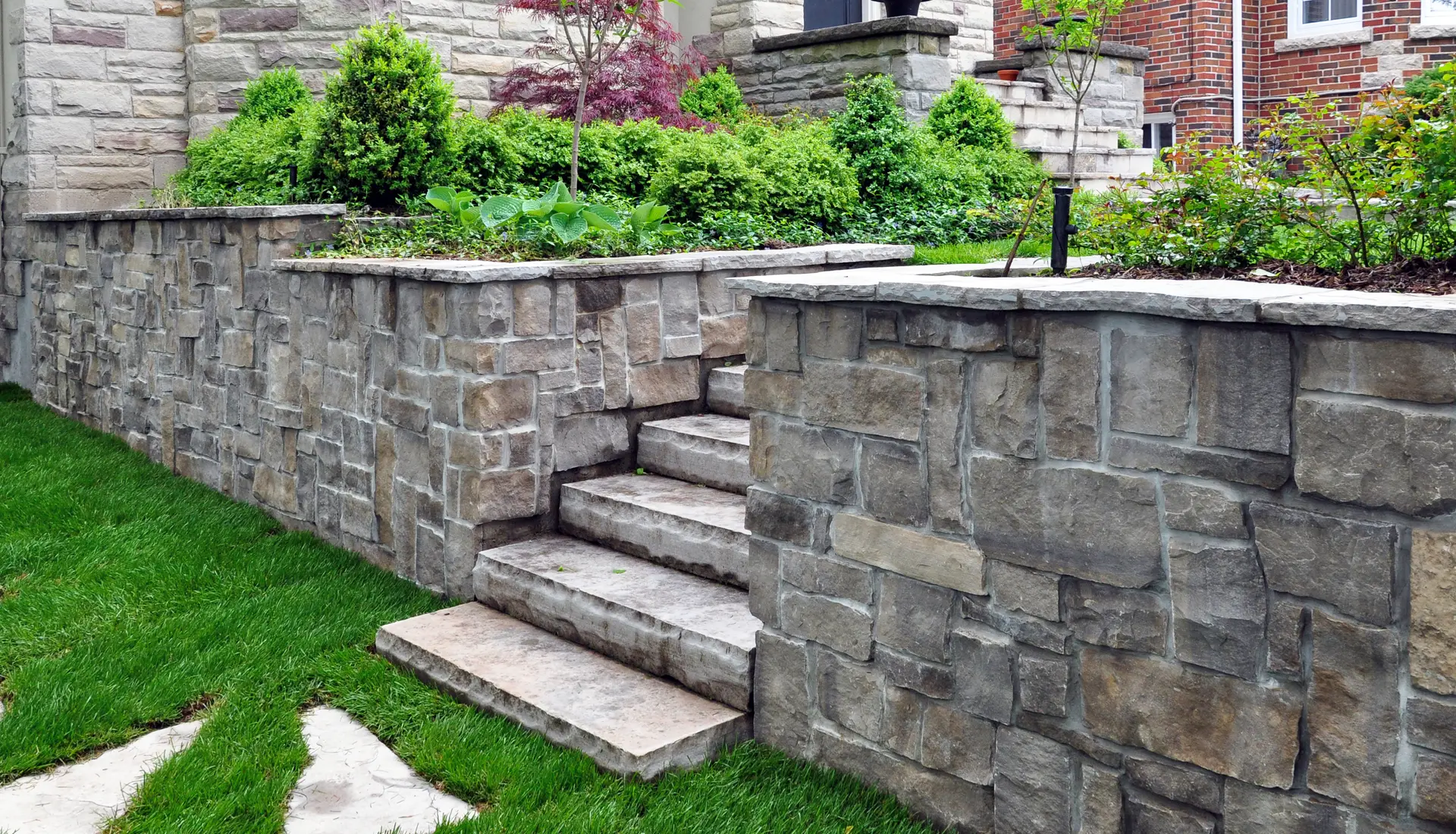
Many homes here have patio doors that open onto a lawn set lower than the floor, so the first step out is the one people notice. Rather than a single deep drop, two shallow steps with matching risers, or a small landing before the lawn, make stepping out with a tray far more comfortable. Each tread needs enough depth to stand on without rushing.
Front paths matter here too. The walk from the pavement to the front door is often an older concrete or slab path that has tilted towards the house, sending rain to the doorstep. Relaying it with the fall reversed, and a firm edge where it meets the front lawn, keeps the entrance dry and tidy.
Cold snaps are hard on paths in wet ground. Water trapped beneath loose slabs freezes, expands and lifts them a little more each winter, which is why a well drained base and fully bedded paving last so much longer than units sat on a few dabs of mortar.
Outdoor steps that stay damp benefit from a textured finish and a clearly marked nosing, so the edge is visible when the light fades on a winter afternoon.
When Paths & Steps Need Replacing
These are the situations that most often lead people to get in touch about this work, and what each one usually means.
Loose or Rocking Slabs
Slabs that tip underfoot, lift at the corners or have sunk are a trip hazard, especially on a front path that visitors use every day.
A Worn Track on the Lawn
If everyone cuts the same corner to the shed or gate, a proper path stops the grass turning to mud and keeps dirt out of the house.
Steep or Uneven Steps
Steps with mismatched heights, crumbling edges or no clear tread feel unsafe. Rebuilding them to even dimensions makes the garden easier to get around.
A Damp Side Passage
Narrow passages that hold puddles, gather moss or have broken concrete make the bins a chore. A new surface laid to a fall gives a firm footing.
Swipe to see more
Path Materials That Cope with Wet Ground
A resin path is a good fit for damper gardens because a properly built resin bound surface is permeable, letting rain pass through rather than pooling on top. It needs a sound, free draining base beneath to work well, so the build matters as much as the finish.
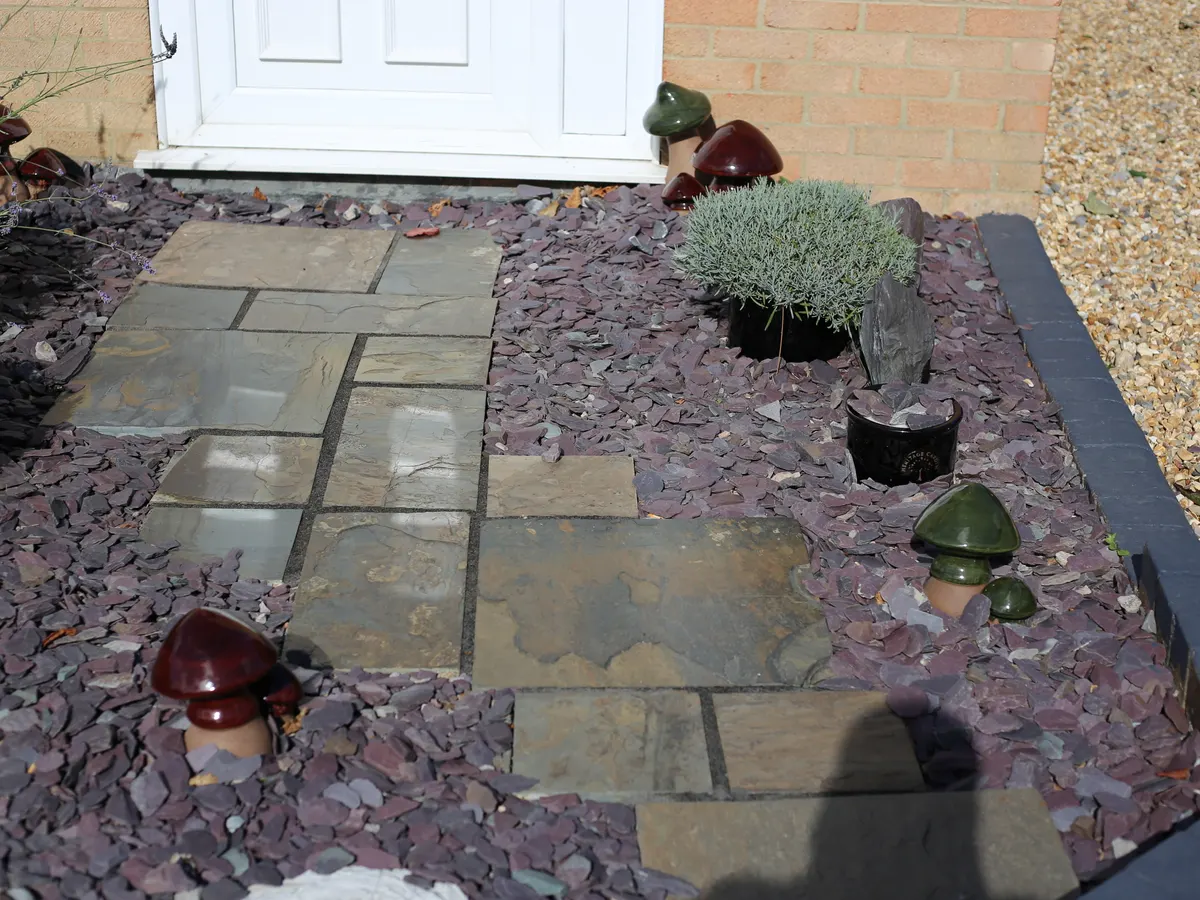
Gravel is another forgiving choice. Over a compacted base with a membrane and a firm edge, it drains freely and can be topped up easily. Where it will carry bikes or wheelbarrows, a stabilising grid underneath stops ruts forming in wet weather.
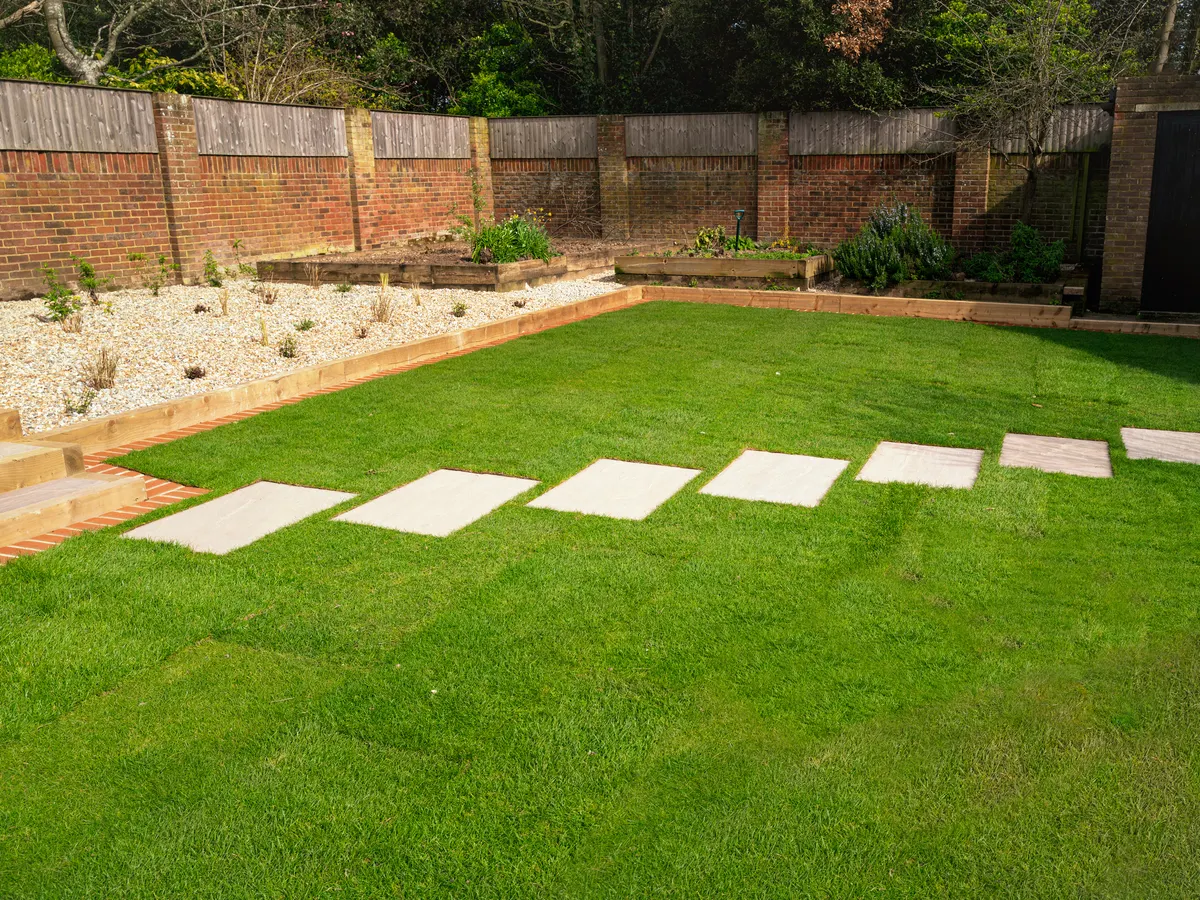
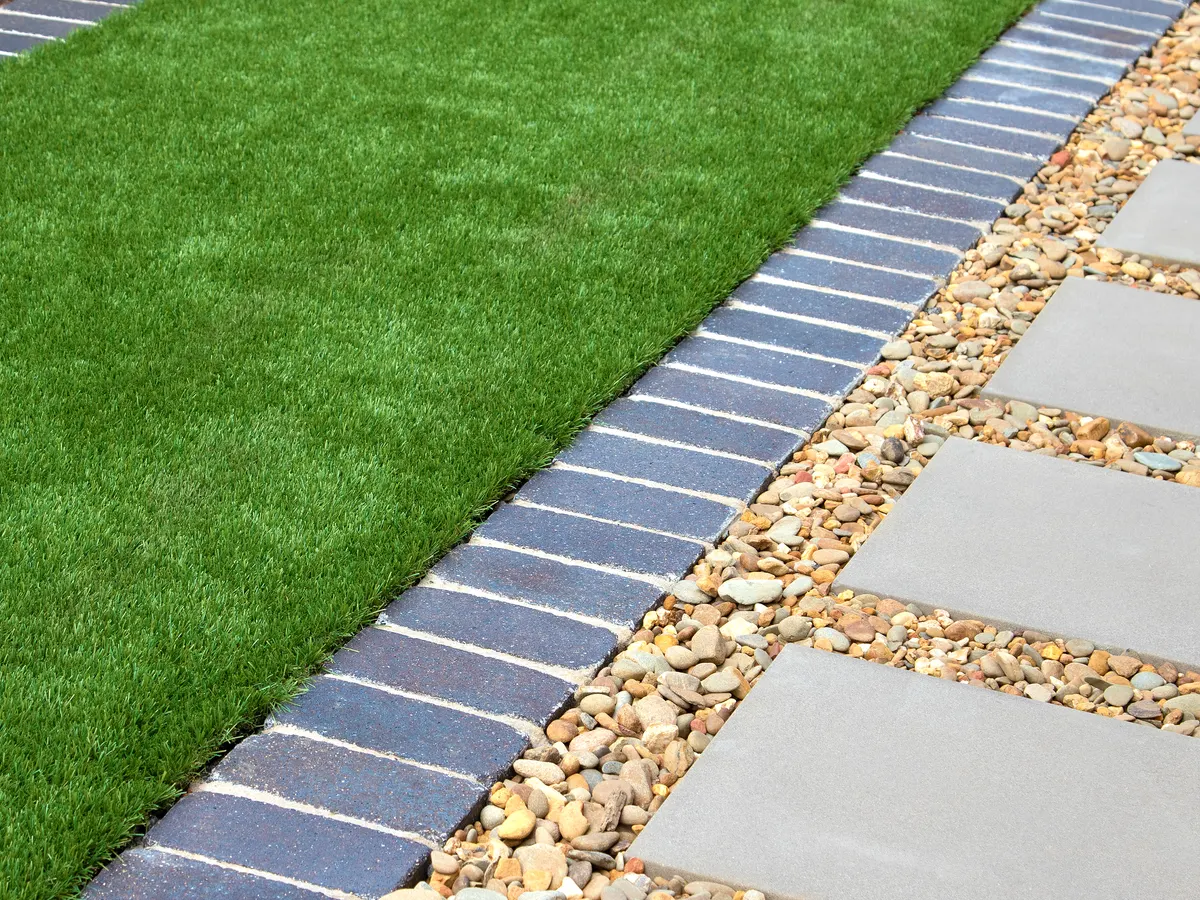
For a paved route, porcelain or sawn stone laid on a full mortar bed with a steady fall gives a clean, durable path. Brick paving laid on a flexible base can also work well if the edges are restrained properly, and it can be lifted and relaid if the ground ever moves.
A slightly raised path with a firm edge on each side can stay drier than one set flush with a lawn that floods. Where the ground either side of steps or a raised path needs holding back, our page on retaining walls in Newport Pagnell explains how we build walls and steps together.
Handrails are worth considering on any flight that stays damp or is used by someone less steady. The cost of paths and steps depends on the length, the depth of base the ground needs, drainage features, the number of steps and the surface you choose. We visit, check how the ground behaves and give you a FREE written quote.
Everything Your Quote Covers
- Marking Out the Route, Width & Step Positions
- Removing Old Slabs, Concrete, Turf or Soil
- A Compacted Sub-Base Laid to Suit the Surface
- Paths in Paving, Natural Stone, Block or Resin
- Steps Built with Even Risers & Treads
- Edging, Pointing & a Full Tidy of the Area
Why Choose Us in Newport Pagnell
A FREE Written Quote First
We look at the area, explain the options that suit it and set out the work and the price in writing before anything is booked.
Matched to Your Patio
We also lay patios and driveways, so a new path can tie in with the surfaces you have, or be planned with them as one job.
Honest Advice on Materials
We explain how paving, stone, block and resin compare for grip, upkeep and cost, so you choose the path that suits you.
Free Quotes Near Bedford
Based in Bedford, we cover Bedfordshire towns, Milton Keynes and Letchworth, and quote in writing after seeing the path.
Drives, Patios & Walls
Driveways, patios, paths, steps, walls and cleaning all sit with us, so one visit and one quote can cover every part of the job.
Swipe to see more
Paths & Steps Ideas
A selection of paths & steps photos to help you picture the finish. Tap any photo to view it full size, then use the arrows to look through the rest.
Swipe to see more
Get a FREE Quote in Newport Pagnell
Send your details or call, and we will arrange a time to look at the job.
How Garden Paths & Steps Are Built
Planning the Route
We mark out where the path and any steps will run, check levels and drainage, and agree the width, material and edging with you before any digging begins.
Excavation & Groundwork
We dig out to the depth the surface needs, remove old paving and spoil, and lay a compacted sub-base so the path stays firm and even under regular foot traffic.
Laying the Path & Steps
Slabs, stone, blocks or resin are laid to the agreed falls, and steps are built course by course with consistent riser heights and solid, well bedded treads.
Finishing & Handover
We point or sand the joints, fit the edging, clear the site and then review the completed work with you to confirm everything has been done as agreed.
Swipe to see more
Paths & Steps FAQs for Newport Pagnell
Do you cover Newport Pagnell?
Can you work if the garden is waterlogged?
When can we start using the path from the patio doors?
Should the steps down from our patio doors have a rail?
Will you damage the border along the side of the path?
Can’t Find the Answer You’re Looking For?
Call or message us on WhatsApp and we will answer it, or send your details for a FREE quote.
Driveways & Patios Across Bedfordshire
From our base in Bedford we cover the towns and villages below and the areas around them. If yours is not listed, call with your postcode and we will tell you straight away.
- Bedford
- Kempston
- Wootton
- Ampthill
- Flitwick
- Cranfield
- Woburn
- Biggleswade
- Sandy
- Shefford
- Willington
- Moggerhanger
- Wixams
- Marston Moretaine
- Milton Keynes
- Bletchley
- Tongwell
- Olney
- Wolverton
- Fenny Stratford
- Stony Stratford
- Bradwell
- Newport Pagnell
- Great Linford
- Kents Hill
- Walton
- Wavendon
- Buckingham
- Letchworth
- St Neots
- Eynesbury
- Eaton Socon
- Eaton Ford